Port Alpha
The Future of American Shipbuilding
In modern history, every global power has been backed by the power of naval and commercial fleets. American-built ships helped win two World Wars and have sustained decades of deterrence. U.S. leadership in shipbuilding anchored the global order that our economy and alliances depend on.
Today that leadership is eroding. And while America’s fleet shrinks, China’s fleet continues to grow.
Ensuring American leadership in shipbuilding will require a new approach and new infrastructure. This is the purpose of Port Alpha.
Today, America faces a shipbuilding problem. We no longer have the ability to produce the ships we need at the speed and scale we need them to support the future fleet, protect our seas, or preserve the ability to move and operate across the world’s most important waters.
The numbers don’t lie. In 1999, China held roughly five percent of global shipbuilding capacity. Today it holds more than half,1 operating at 23.2 million tons of annual production capacity against less than 100,000 tons in commercial shipbuilding in the United States.2
In 2024, China launched 1,400 merchant vessels. America launched five.3
The People’s Liberation Army Navy passed the U.S. Navy in hull count four years ago, and the gap is widening.4 Roughly 80 percent of global trade moves by sea,5 but the United States builds less than one percent of the world’s commercial ships.
Meanwhile the demand on our shipyards has never been higher. The Navy’s shipbuilding plan calls for a larger fleet that integrates manned and unmanned platforms. The Administration’s Maritime Action Plan, the President’s August 2026 memorandum on rebuilding the Navy and the shipbuilding industrial base, and the SHIPS for America Act all call for a strategic commercial fleet of U.S.-built, U.S.-flagged vessels.
Unfortunately, only eight American shipyards can build a ship over 400 feet and every one of them is fully committed.6 In addition, the industry needs roughly 250,000 skilled workers over the next decade that it does not currently have.7
More money aimed at the yards we already have is necessary. However, it is nowhere near sufficient. You cannot surge a system that has no room left to surge.
Called to protect American interests at sea, Saronic is building Port Alpha: a shipyard committed to building vessels for both defense and commercial applications, at a scale and pace not seen on American shores in generations. We are investing in critical capacity by building a clean sheet shipyard – a shipyard of the future – to reimagine and reinvigorate shipbuilding in America.
Designed to be one of the most advanced shipyards on Earth.
Port Alpha takes a software-defined approach coupled with global best practices to deliver one of the world’s largest and most advanced shipyards, designed from the ground up for speed and scale. Unlike legacy shipyards which are constrained by inherited layouts built around bespoke vessels with lower production rates, Port Alpha is designed from the ground up to build a variety of vessels at scale, with modularity and throughput defining the facility’s architecture. Port Alpha also leverages strategic partnerships with established shipbuilders, like Samsung Heavy Industries (SHI), to ensure access to the most advanced autonomy-capable maritime systems and technologies possible.
Port Alpha is designed with autonomy in mind, but what makes it work for autonomous vessels — design for manufacturing, linear flow, production automation, and process discipline — works just as well for manned ships. That’s shipbuilding capacity the country can put to work across the board.
After a year-long nationwide search, we chose Brownsville, Texas as the site for Port Alpha. The site offers deepwater access and room to grow for decades. More than $3 billion in planned investment will create up to 10,000 direct jobs, from welders and machinists to engineers and naval architects. Together with the State of Texas, Cameron County, the Port Isabel Independent School District and the Port of Brownsville, we will make South Texas a center of excellence for advanced maritime manufacturing.
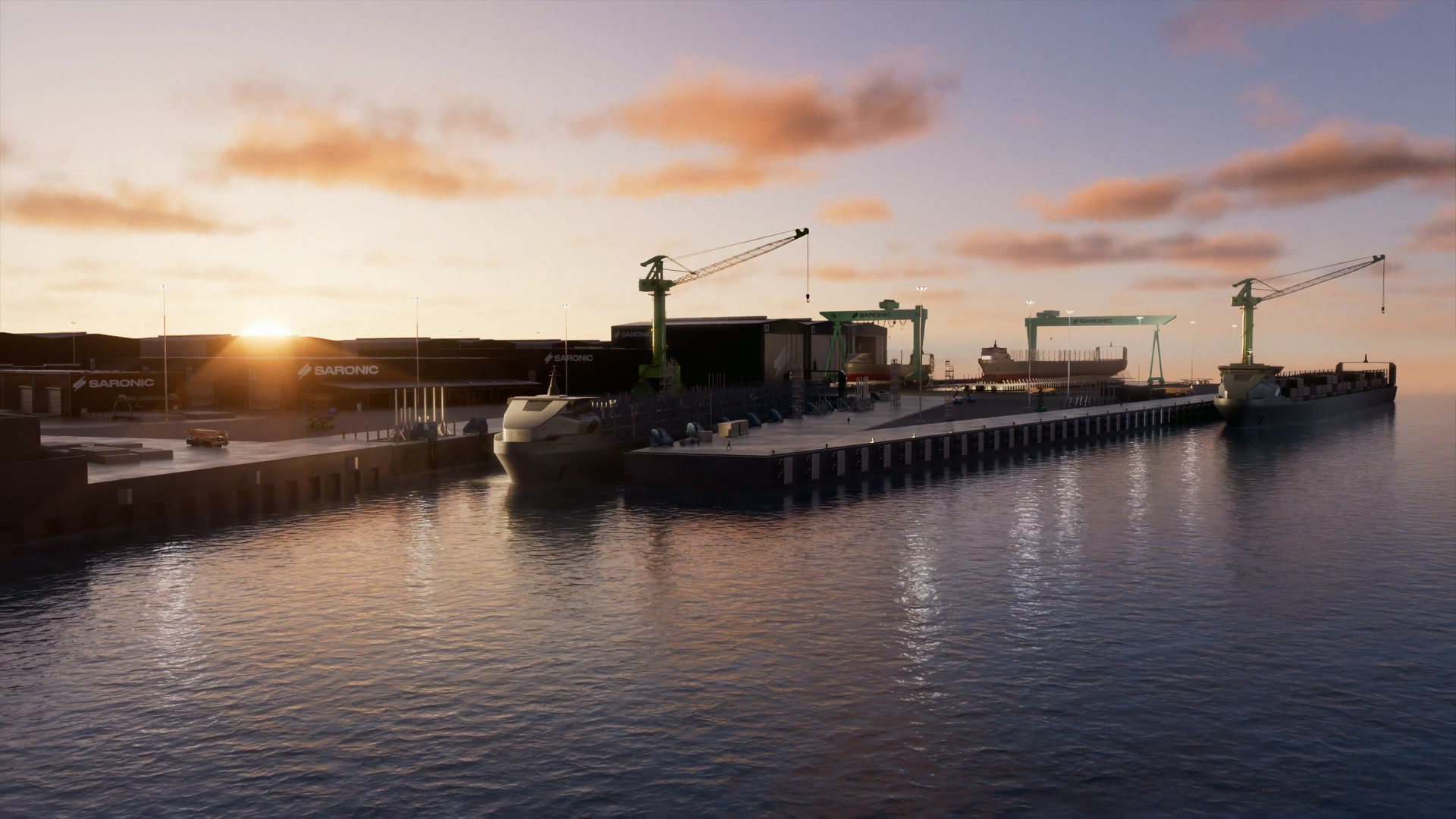
Investment & Economic Impact
Port Alpha will initially be capable of producing vessels up to 850ft.; future site expansion could support production of vessels over 1,200ft. At opening, Port Alpha will introduce an initial 150,000 gross tons of annual shipbuilding capacity — more than doubling current U.S. commercial shipbuilding capacity — with the potential to scale to over 2 million gross tons. Construction has already begun, targeting initial operations in 2028.
The first vessels built at Port Alpha will be Landing Craft Utility (LCU) vessels under a U.S. Navy contract awarded to Saronic. With 835 acres today and the ability to expand to over 4,000 acres in the coming years, Port Alpha is built to adapt to what the nation needs as a strategic national asset.
Location & Site
But what matters more than dollars and acres is Saronic’s production philosophy. In almost every legacy shipyard, the facility dictates the manufacturing process, rather than the vessel dictating the facility. Yards built around fixed waterfronts and inherited layouts force ships through inefficient material paths, congested work areas, and constant rehandling. The cost is measurable: optimized layouts that minimize rework, handling, and waiting can cut construction cycle times by 30 to 60 percent.8
The world’s best yards closed part of this gap by leveraging modern manufacturing, but they retrofitted those principles onto legacy infrastructure. Port Alpha is a clean sheet design, with every layout, crane, and material path optimized for the vessels and their production rate rather than inherited from precedent.
Whether building to support the urgent needs to deliver the manned vessels of today or building to deliver the autonomous fleets critical to our future success at sea, Port Alpha also incorporates vessel design and automation to introduce multiple efficiencies not found in existing U.S. shipyards.
Facility Layout
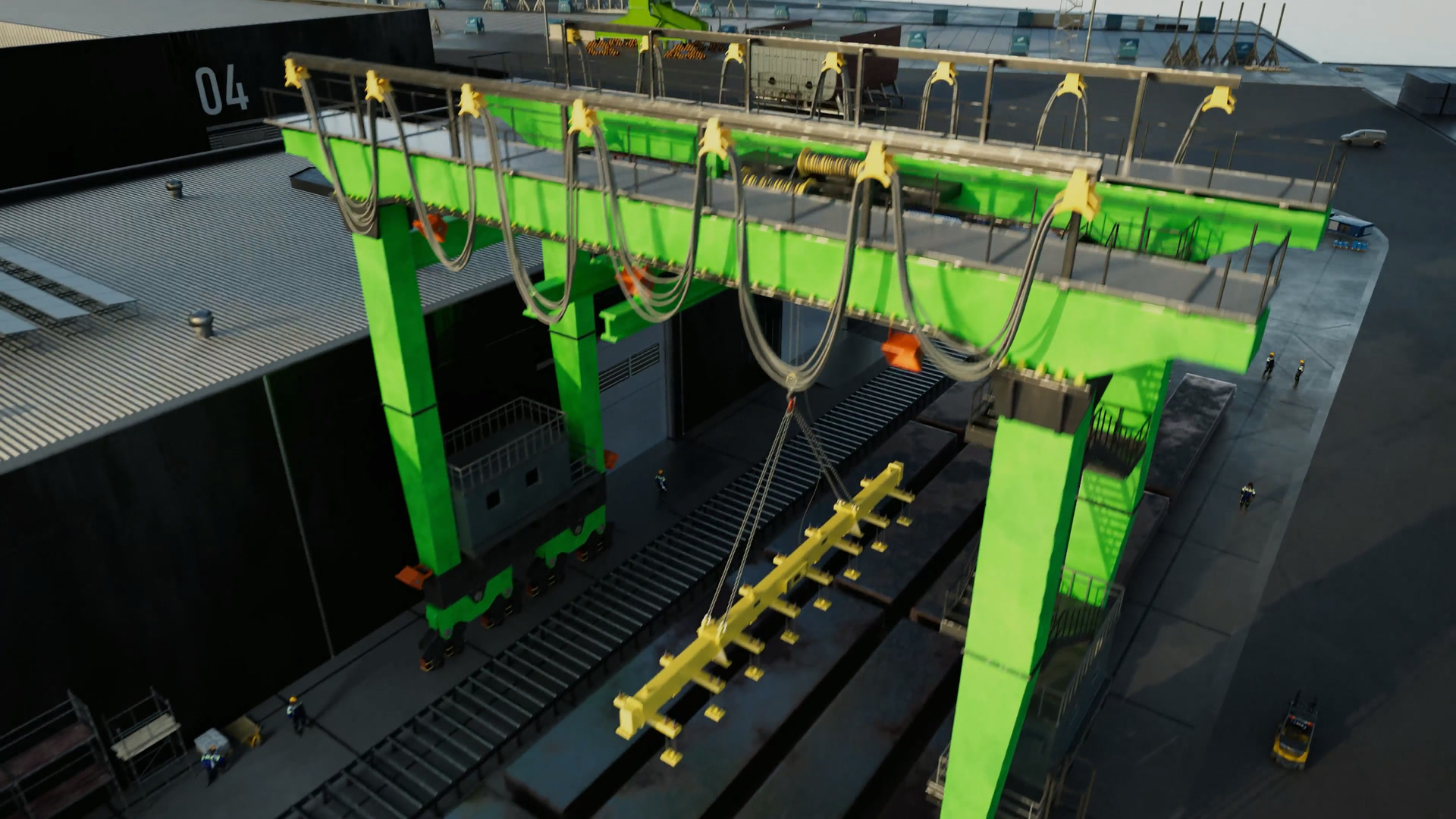
Throughput and flow-efficiency targets drive layout, crane coverage, and shop sizing of Port Alpha, and linear, unidirectional flow is built into the footprint while bottleneck risk is engineered out rather than managed after the fact. Early-stage outfitting capability is designed into the yard, with envelopes sized to accommodate a range of vessel classes.
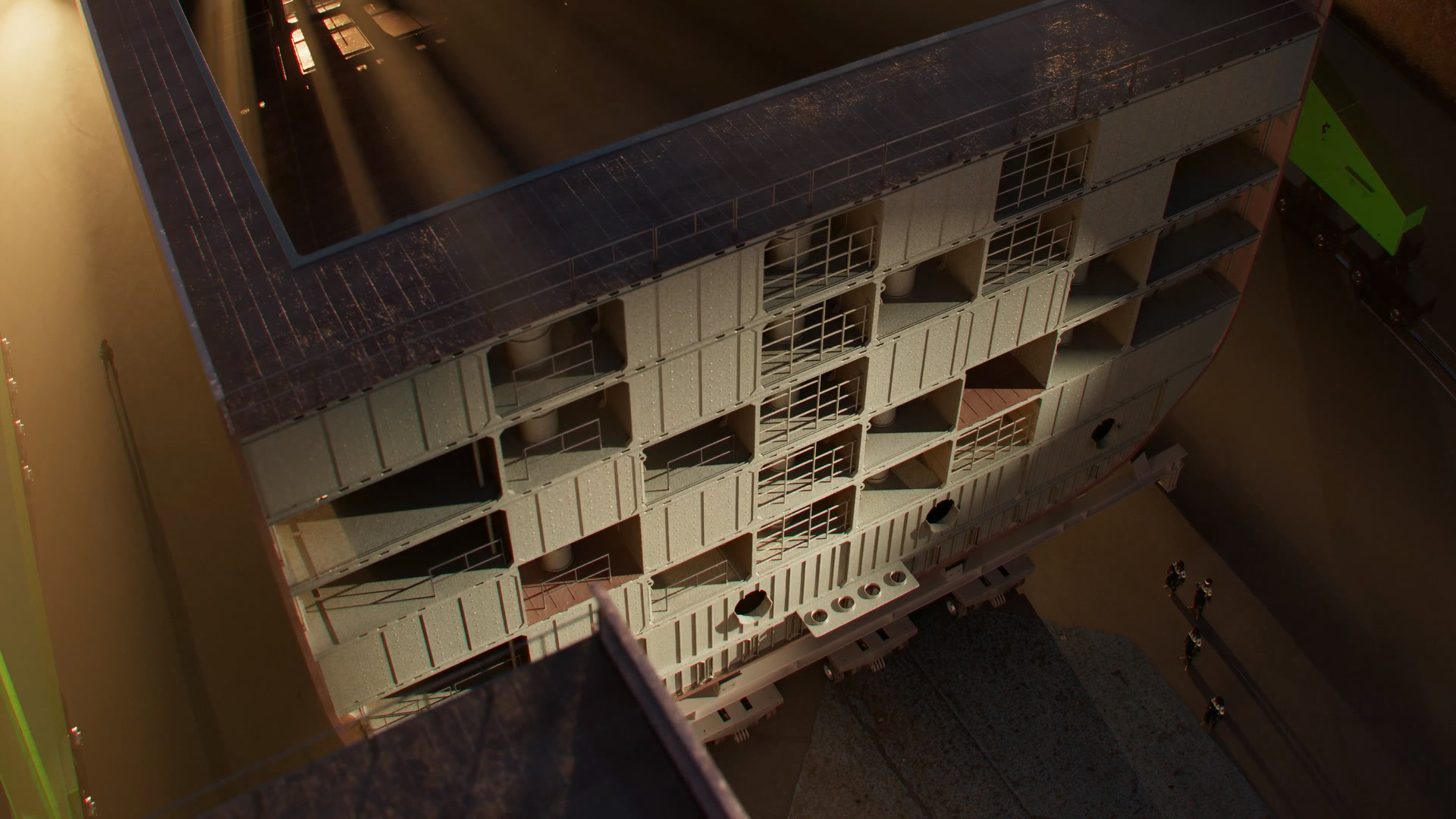
The result is that the steel travel distance falls sharply versus legacy U.S. yards, transport shifts off cranes and onto more efficient modes, and final hull erection consolidates from dozens of complex lifts to a handful of large-block placements, collapsing cycle time at a key constraint point.
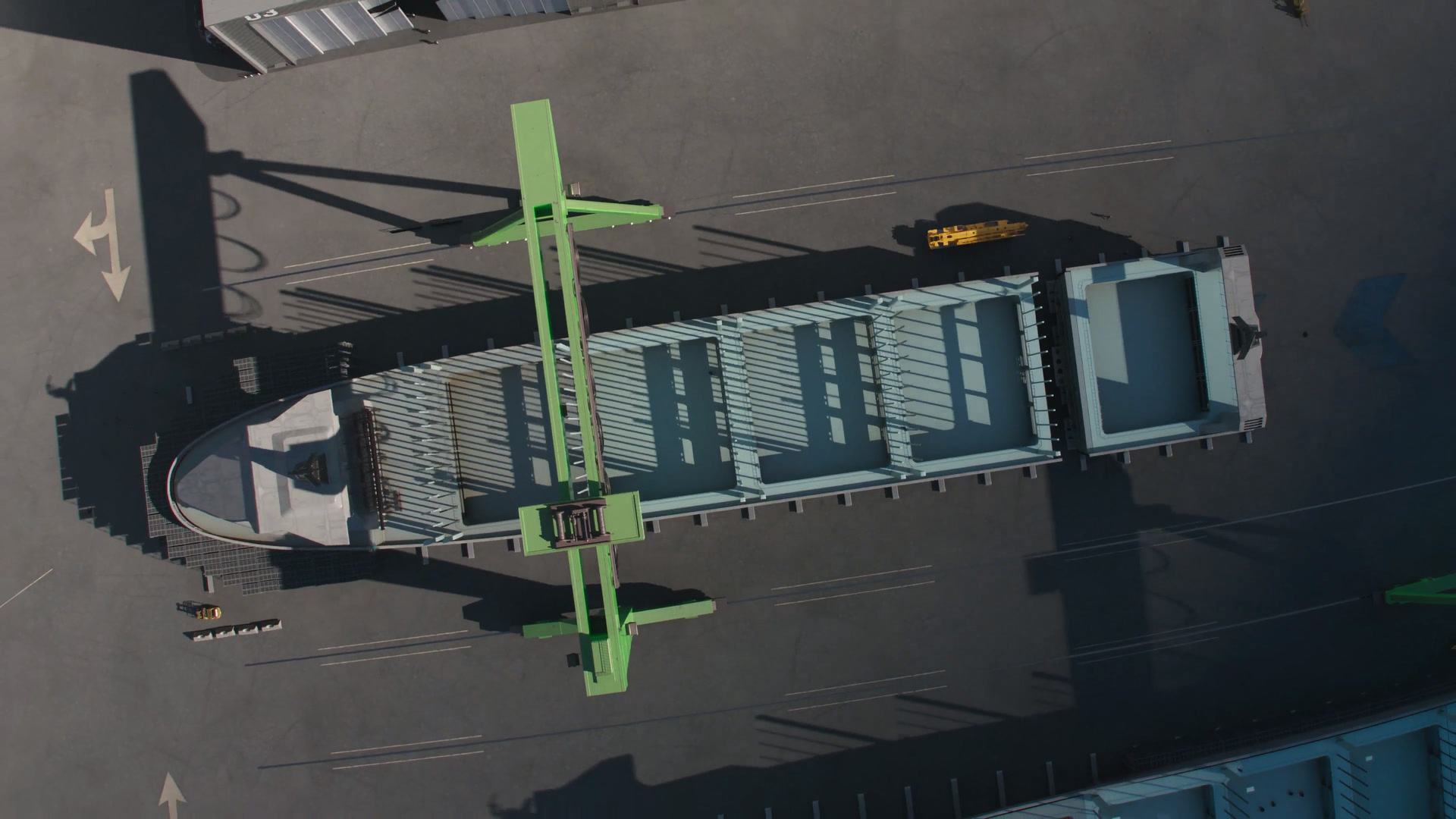
Phase 1 Facility Specifications
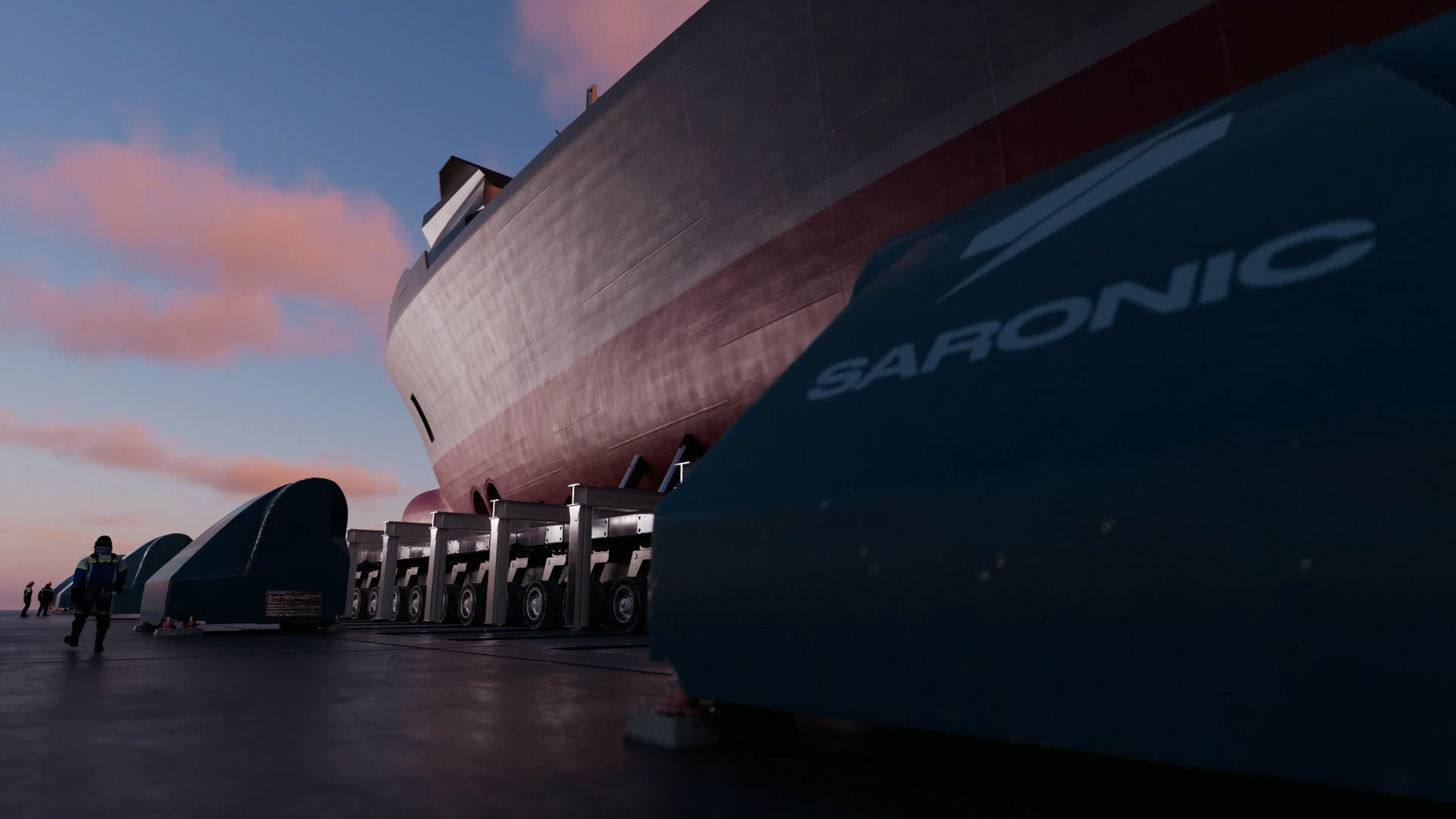
Vessel Design
For autonomous vessels, and where possible with manned vessels, Saronic designs for manufacturing from day one, with shared structural details, systems, outfitting standards, jigs, cutting programs, and work instructions carrying over from one vessel class to the next. Designing for that repeatability from inception enables robotic welding, digitized quality control, CNC fabrication, and data-driven scheduling to deliver their full return.
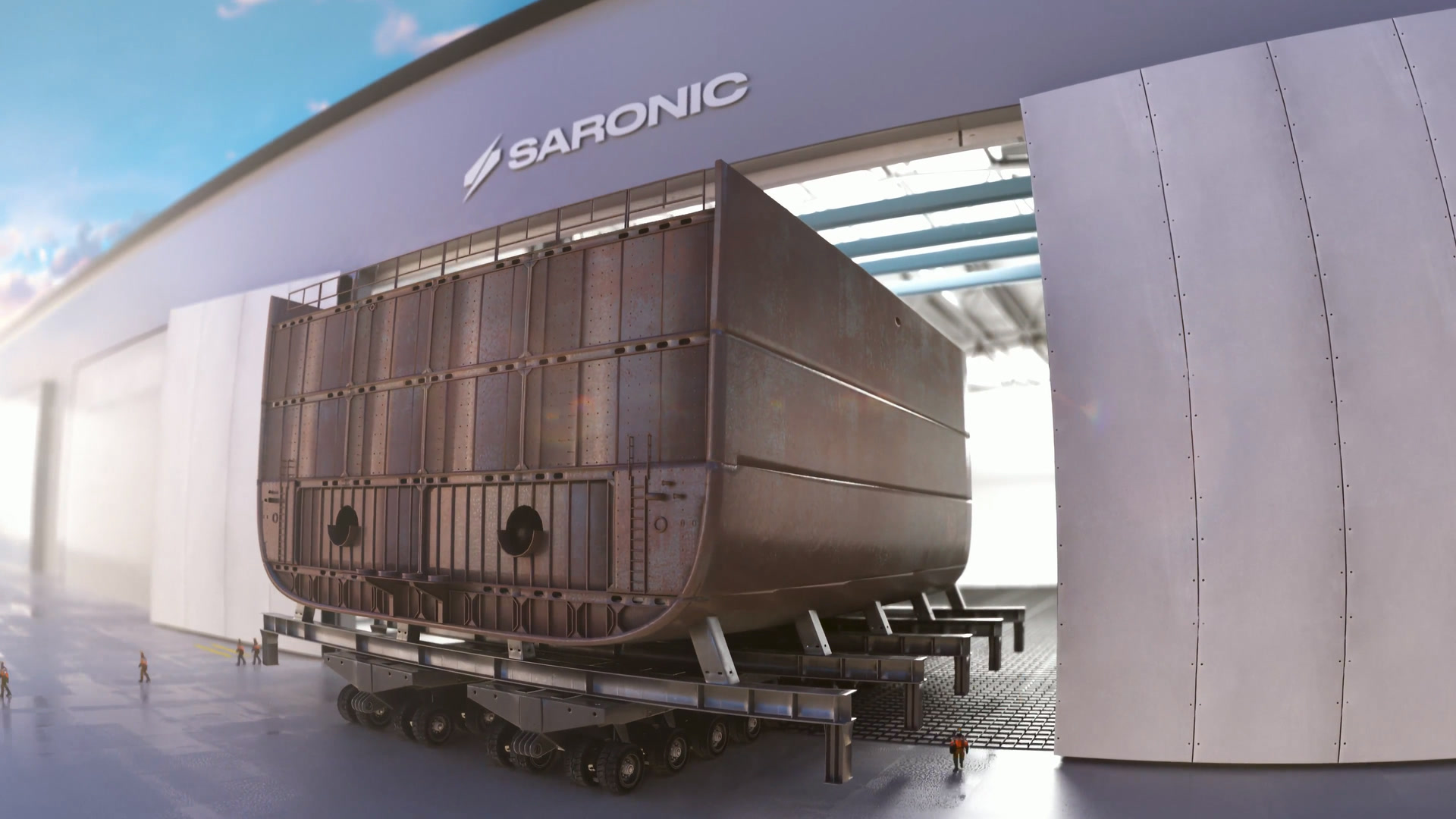
Production System
Production runs as a measured, fully integrated ecosystem with statistical process control at every stage. Every workstation is metered for cycle time, throughput, defect rate, and rework, and dimensional measurement catches deviations before they become downstream rework. Material, hardware, and consumables arrive at the workstation pre-kitted to each work order, and weekly plan-reliability and material-readiness gates keep crews from starting work that will stall.
Together these practices attack transport, waiting, and rework that consume significant legacy yard cycle time. Learning is captured in station-level data rather than only tied to a single hull, so gains compound across a mixed orderbook, while the same repeatability accelerates talent development.
Production Capacity
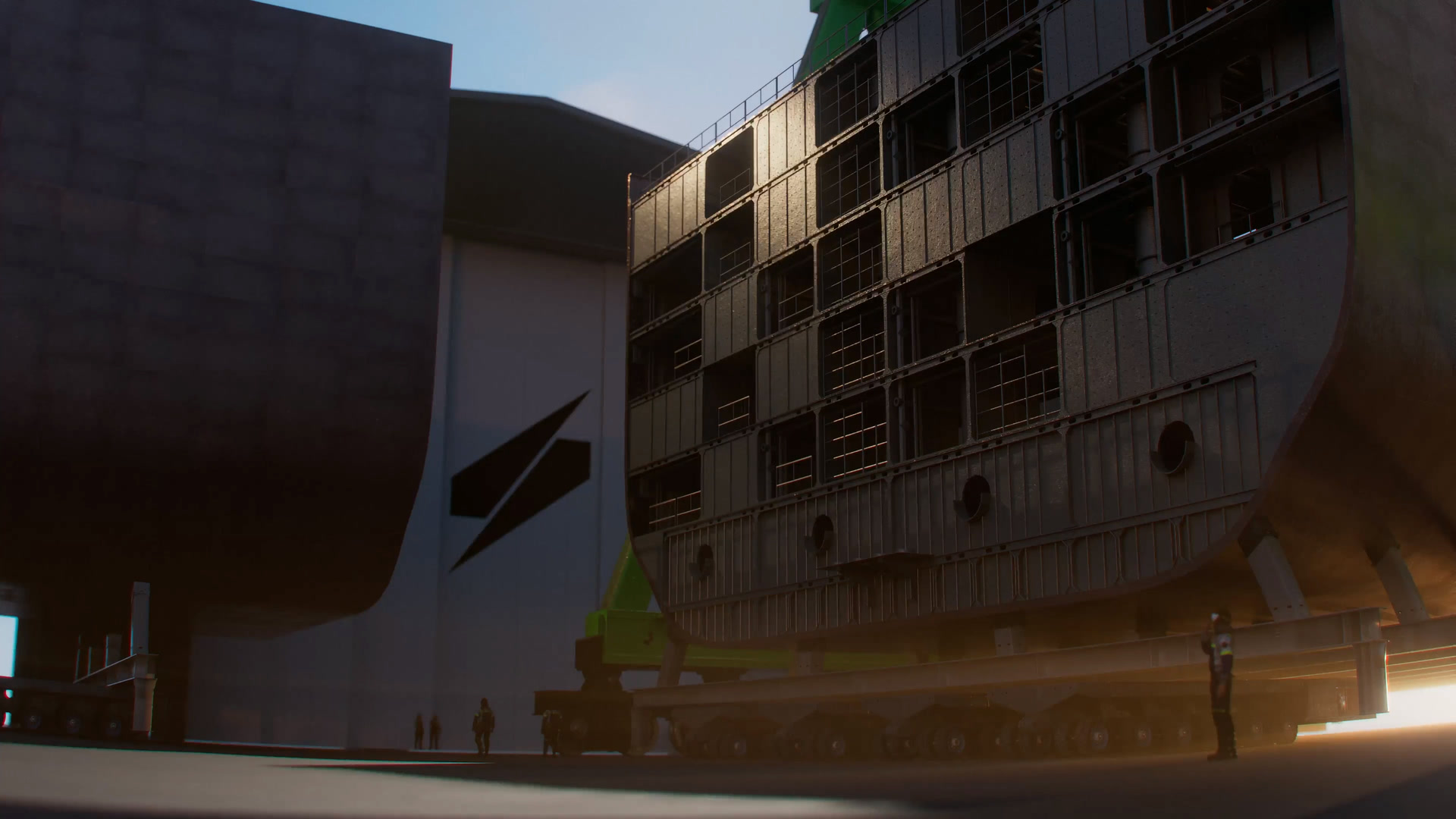
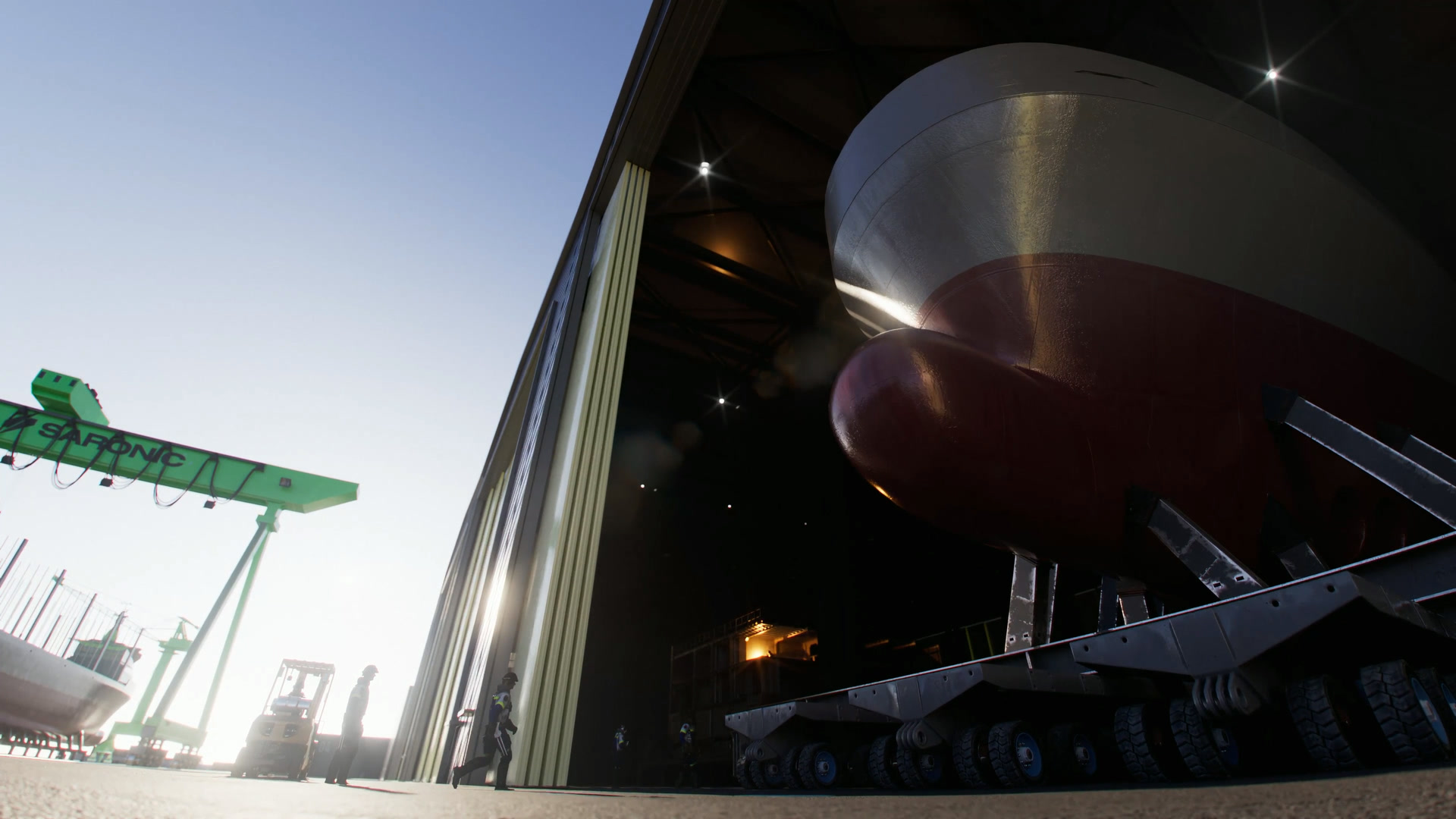
With a new approach to facility layout, automation, design and production, Port Alpha will help revitalize America’s defense and commercial shipbuilding base. The shipyards that built Liberty Ships during World War II were commercial yards before the war and returned to commercial production afterwards. Our base vessels are agnostic to end use or end user. The maritime industrial base is more resilient when it can serve defense and commercial customers alike. Designing and building for both markets keeps the workforce, tooling, and production infrastructure continuously active, rather than idle or volatile.
Port Alpha is ambitious. It needs to be. We are facing a significant shipbuilding gap with China, exacerbated by atrophy in a proud sector of the American workforce and industrial base, exposing us to great economic and geostrategic risk.
Port Alpha is also tremendously exciting. We see that reflected in the support from sailors and Admirals, welders and pipe fitters, draftsmen and naval architects, local and state officials, and maritime operators of all varieties. Our Franklin shipyard is an example of what is possible when you combine manufacturing and engineering talent, private capital, a software-defined approach and conviction. Our 180′ Marauder built out of our Franklin shipyard went from prototype to production in less than one year. This is a proof point that the American industrial playbook of old is still alive. Lead with ingenuity. Turn the unbelievable into the routine. Build what no one else dares to build.
We are privileged to work during an era of renewed national interest in reindustrialization. Our collaboration with local, state, and federal representatives on Port Alpha is proof that shipbuilding has outsized importance for American security. We are honored to support their efforts to secure the future of this vital American industry.
Port Alpha is our calling and our purpose. It is our commitment not just to restore what was, but to deliver what can be. It enshrines an unshakeable belief that American workers can build the most sophisticated maritime systems on Earth. It hails a new era of maritime autonomy, delivered at a scale and cost that will deter conflict and reshape entire industries.
America is a maritime nation.
Let’s build it together.
Endnotes
- 1. csis.org/analysis/threat-chinas-shipbuilding-empire
- 2. twz.com/alarming-navy-intel-slide-warns-of-chinas-200-times-greater-shipbuilding-capacity
- 3. foxnews.com/opinion/rep-garamendi-sen-kelly-must-work-together-make-america-shipbuilding-power
- 4. media.defense.gov/2020/Sep/01/2002488689/-1/-1/1/2020-DOD-CHINA-MILITARY-POWER-REPORT-FINAL.PDF
- 5. unctad.org/topic/transport-and-trade-logistics/review-of-maritime-transport
- 6. whitehouse.gov/maritimemight
- 7. mckinsey.com/industries/aerospace-and-defense/our-insights/helming-a-sea-change-building-the-future-workforce-for-us-shipbuilding
- 8. mckinsey.com/industries/aerospace-and-defense/our-insights/bold-moves-to-restore-us-commercial-shipbuilding-competitiveness